
Behavioral UX UI design focuses on how people think, decide, and act when they use a Fintech Product. In banking and financial apps, every tap matters because trust, clarity, and confidence decide whether users stay or leave. Therefore, fintech teams must design experiences that feel simple, safe, and human, even when the underlying systems are complex. Behavioral thinking also plays a major role during first-time user journeys, which is why strong onboarding patterns are essential for any fintech platform. Our guide on UX UI Design for Fintech Onboarding That Reduces Drop-Off explains how behavior-driven onboarding directly improves activation and retention.
At Graphymania, we see behavioral design as the bridge between user psychology and real business outcomes. When done right, it improves engagement, reduces drop-offs, and builds long-term loyalty across digital bank platforms and banking digital ecosystems.
What Is Behavioral UX UI Design in Fintech?
Behavioral UX UI design applies insights from human behavior to shape how users interact with fintech interfaces. Instead of asking, “Does this screen look good?”, it asks, “Why would a user act here, hesitate there, or abandon the flow?”
In fintech, this matters more because money decisions are emotional. Users feel anxious, careful, and sometimes overwhelmed. As a result, design must guide users gently and clearly.
Key behavioral principles used in fintech design include:
Cognitive ease – reducing mental effort during tasks
Trust signals – reassuring users at every step
Feedback loops – confirming actions instantly
These principles are widely applied in bank corporate platforms, fin banking tools, and modern digital bank apps to improve usability and confidence.
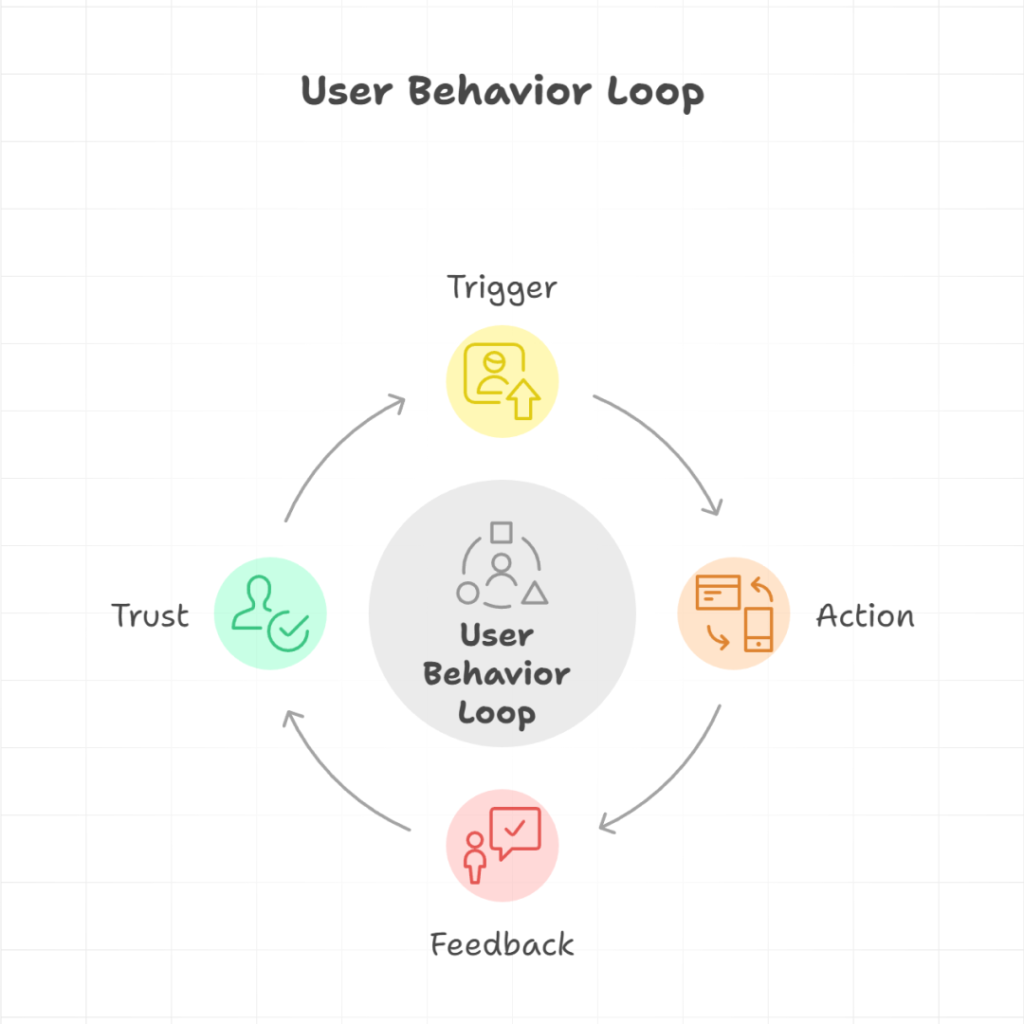
Trust is one of the strongest behavioral triggers in finance, and design decisions heavily influence how secure users feel. You can explore this deeper in our detailed article on Fintech Product Design: Building Trust Through UX UI Design, where we break down trust-building patterns used by modern fintech brands.
Why Behavioral Design Is Critical for Fintech Products
A Fintech Product often handles sensitive data, large transactions, and personal identity. Because of this, users expect clarity and reassurance at all times.
For example, in a bank mobile application, unclear labels or sudden screen changes can raise doubt. However, a well-designed behavioral flow explains what is happening and why, so users feel in control.
Behavioral UX helps fintech brands:
Reduce onboarding abandonment
Increase transaction completion rates
Build trust without extra content
Meanwhile, traditional banking digital platforms that ignore user behavior often feel rigid and stressful. Modern users, however, compare every experience to the best digital apps they use daily.
Core Behavioral UX Principles Used in Fintech UI
Many of these behavioral patterns are now evolving through personalization and AI-led experiences. To see how these principles shape future-ready interfaces, read Fintech UX UI Design Trends 2026: AI-Driven and Personalized Interfaces.
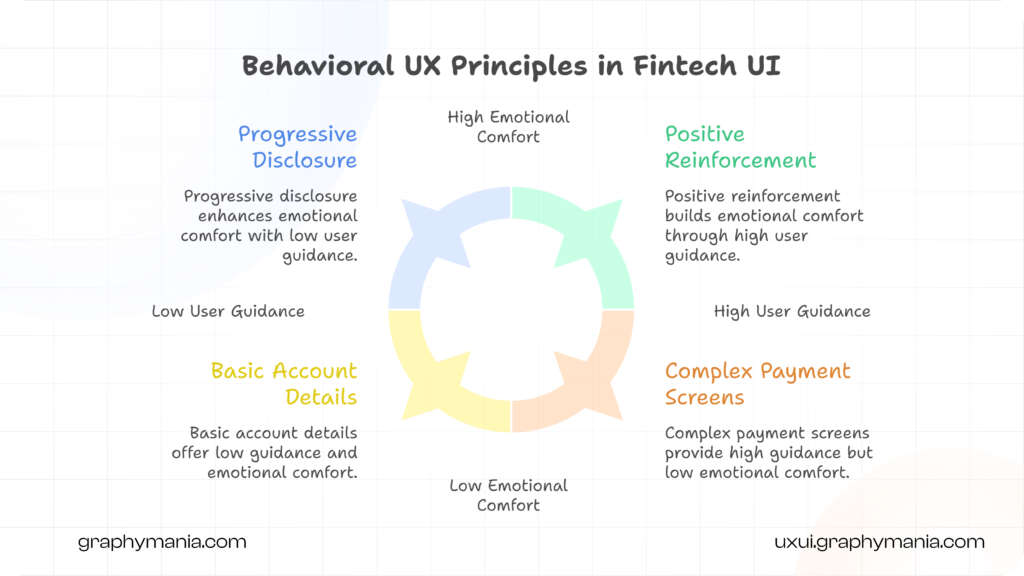
1. Progressive Disclosure
Fintech apps should show only what users need at the moment. Therefore, complex details are revealed step by step. For Example: A digital bank shows basic account details first, then expands into insights and settings only when needed.
2. Visual Hierarchy and Focus
Clear typography, spacing, and contrast guide attention. As a result, users know exactly where to look next, especially during payments or confirmations.
3. Positive Reinforcement
Microcopy like “You’re all set” or subtle animations after actions reassure users. This builds emotional comfort in fin banking journeys.
Behavioral UX in Key Fintech Touchpoints
Onboarding Flows
Onboarding is often where users drop off. However, behavioral UX reduces friction by:
Breaking forms into smaller steps
Explaining why data is needed
Showing progress clearly
This approach works well for bank corporate apps that serve both individuals and businesses.
For a broader understanding of how these behavioral touchpoints come together across fintech platforms, our in-depth overview on UI UX Design for Fintech covers design foundations, challenges, and best practices.
Transactions and Payments
During payments, users seek certainty. Therefore, confirmation screens, previews, and clear error messages are essential in any bank mobile application.
Dashboards and Insights
Behavioral design helps users understand their finances without stress. For example, visual summaries and simple language make banking digital dashboards more approachable.
Real-World Behavioral UX Example
Consider a digital bank that redesigned its transfer flow. Earlier, users saw a single long form. As a result, many abandoned the process.
After applying behavioral UX:
The flow was split into clear steps
Each step explained its purpose
Confirmation feedback was added
Because of these changes, completion rates increased, and support queries dropped. This shows how small behavioral improvements can transform a Fintech Product experience.
How Graphymania Approaches Behavioral UX UI Design
At Graphymania, we design fintech interfaces around real user behavior, not assumptions. We analyze where users pause, hesitate, or exit, and then redesign flows to feel natural and supportive.
Our approach includes:
Mapping emotional states across journeys
Simplifying decisions without removing control
Designing trust-first interfaces for fin banking
As a result, our fintech clients see stronger engagement and better long-term retention across digital bank platforms.
Measuring the Impact of Behavioral UX in Fintech
Behavioral UX is not subjective. It is measurable.
Key metrics include:
Drop-off rate reduction
Task completion time
Feature adoption
When these improve, it shows that users feel confident using the Fintech Product. Therefore, behavioral UX directly supports both user satisfaction and business growth.
Conclusion: Designing Fintech Products That Feel Human
Behavioral UX UI design turns complex financial systems into experiences users trust and enjoy. By understanding how people think and act, fintech brands can design interfaces that guide, reassure, and empower users.
In conclusion, every successful Fintech Product today must balance functionality with psychology. When behavioral design is done right, banking digital experiences stop feeling transactional and start feeling supportive. That is where long-term trust begins.
"Great fintech design doesn’t push users to act. It understands how they think and guides them with confidence"

MOHD ARMAN
FAQs
1. What is behavioral UX UI design in fintech?
Behavioral UX UI design focuses on understanding user behavior and psychology to create intuitive and trustworthy fintech interfaces.
2. Why is behavioral design important for digital banking apps?
Because users make sensitive financial decisions, behavioral design reduces anxiety and improves confidence in digital bank experiences.
3. How does behavioral UX improve a bank mobile application?
It simplifies flows, adds reassurance, and guides users clearly, which reduces errors and drop-offs.
4. Can behavioral UX help bank corporate platforms?
Yes. It improves usability for complex workflows while maintaining clarity for different user roles.
5. Is behavioral UX measurable in fintech products?
Yes. Metrics like completion rates, engagement, and reduced support tickets show its impact.
Still here?
Great. Share your goals, and Graphymania will help you to design fintech experiences that users trust instinctively. Let’s build behavior-driven UX together.