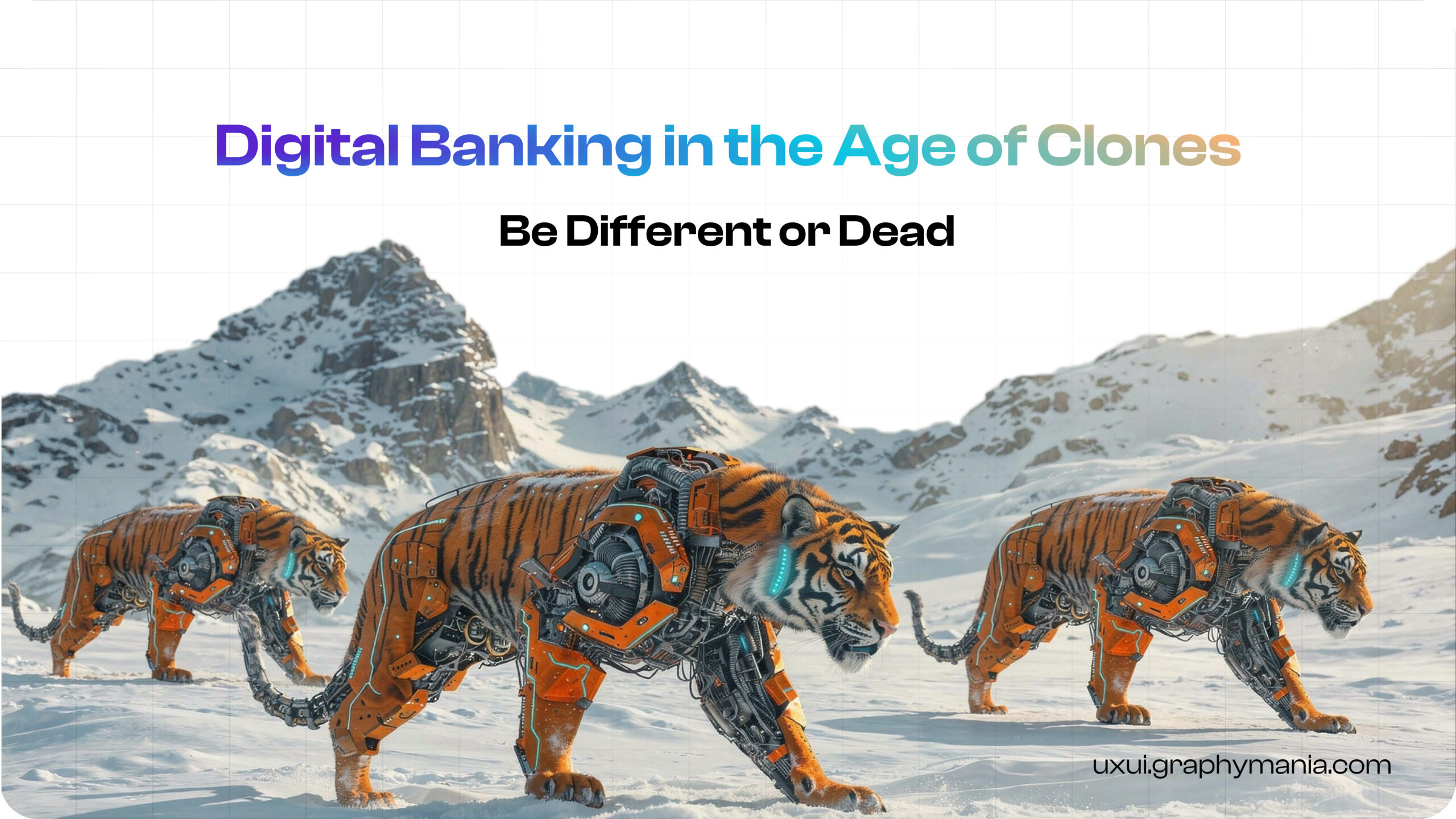
The Digital Banking Experience has become the primary way customers interact with financial institutions. However, as mobile banking evolves, many platforms are starting to look and feel the same. Buttons sit in familiar places, dashboards follow identical layouts, and interactions feel predictable. While this “safe” approach reduces risk, it also removes personality. As a result, banks struggle to create emotional engagement in banking and fail to stand out in an increasingly crowded market.
Today, differentiation in banking no longer comes from features alone. Instead, it comes from how users feel while using a product. UX UI design now plays a critical role in shaping emotional connection, trust, and long-term customer loyalty in banking. In this blog, we explore why clone-like designs are holding banks back, and how a strong user experience (UX) strategy can turn digital banking from a commodity into a memorable brand experience.
The Rise of Generic Banking Apps: Why “Safe” Design Leads to Irrelevance
Modern digital transformation in finance has pushed banks to launch apps quickly. However, speed often comes at the cost of originality. As a result, generic banking apps dominate the market.
The “Copy-Paste” Problem in Financial UX
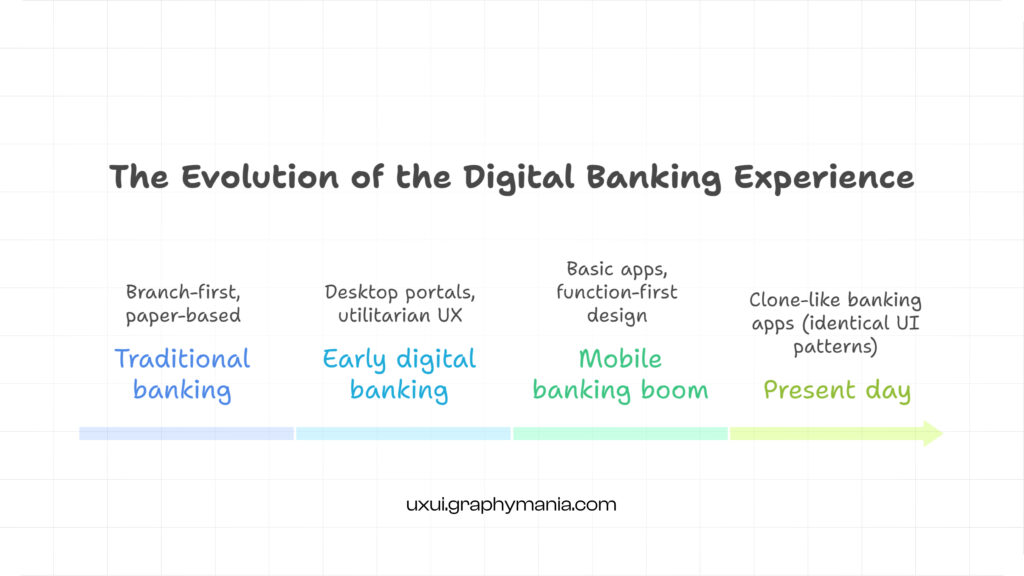
Most banking apps follow the same formula because proven patterns feel reliable. For example, balance at the top, transactions below, and actions hidden behind familiar icons. While this improves usability, it also creates clone-like designs. Users can switch between apps without noticing a difference, which weakens brand recall and emotional connection.
Moreover, when every interface looks the same, banks compete only on price or features. That is a dangerous place to be because loyalty becomes fragile.
Why Banks Settle for Homogenized Designs
Banks choose safe UX because regulations are strict, stakeholders are cautious, and innovation feels risky. However, playing safe in design is no longer safe for business. Meanwhile, users compare banking apps not just with other banks, but with fintech app design leaders who prioritize delight and clarity.
As a result, banks that fail to evolve risk becoming invisible in a sea of sameness.
The Cost of Poor UX: Losing Customer Loyalty in Banking
When design lacks identity, users feel no reason to stay. This is where the cost of poor UX becomes clear.
How a Lack of Differentiation Kills Retention
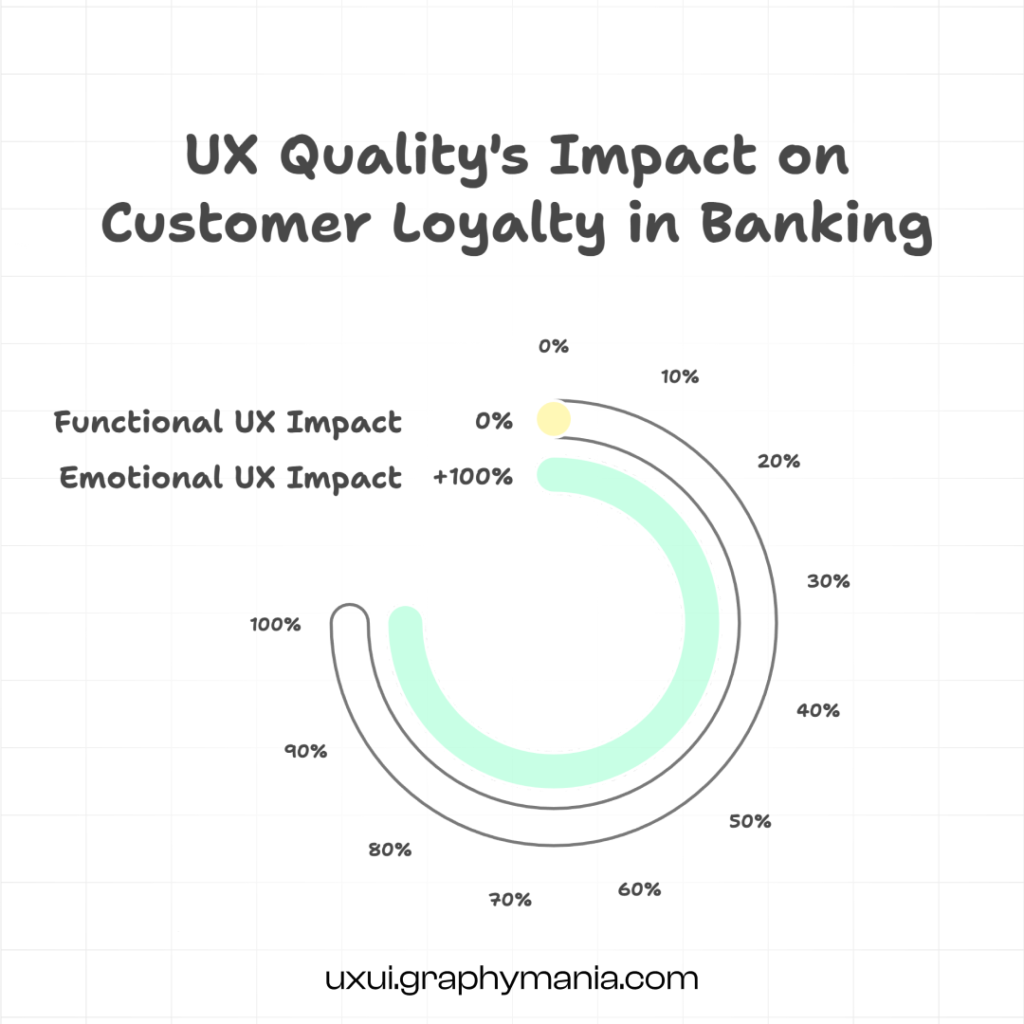
Customer loyalty in banking is built through repeated positive experiences. However, if an app feels generic, users see no emotional value in it. Therefore, switching to another provider feels effortless.
In addition, poor UX increases friction, confusion, and frustration. As a result, users disengage, even if the product works perfectly.
The Link Between Emotional Connection and Trust
Trust is emotional before it is logical. A calm interface, thoughtful micro-interactions, and clear language create reassurance. Emotional engagement in banking helps users feel understood, which builds confidence over time.
Because money is personal, emotional connection matters more here than in almost any other industry.
Fintech App Design vs. Incumbents: Winning with Personality
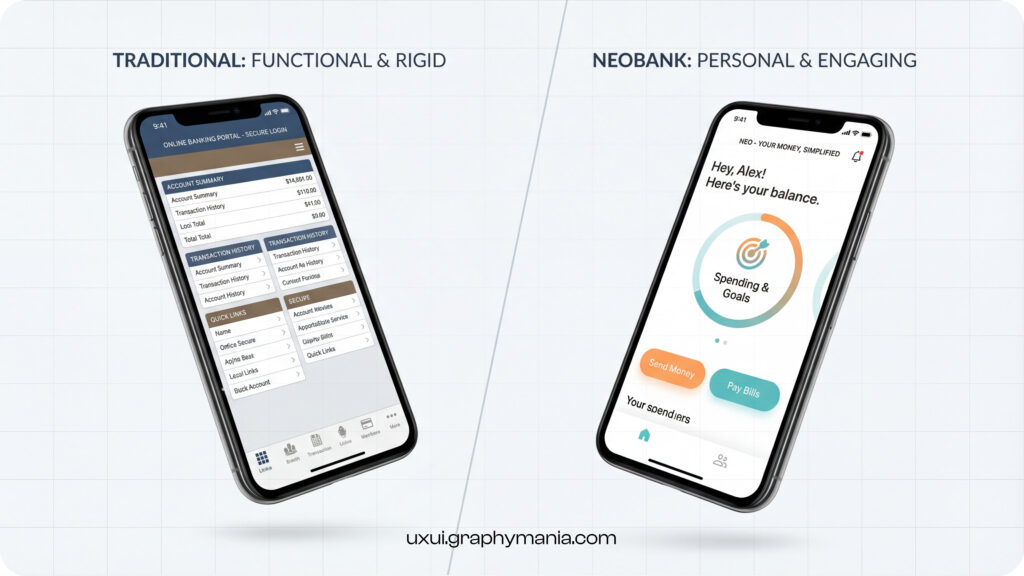
Fintech and neobanks have rewritten expectations around the Digital Banking Experience.
Lessons from Neobanks on Humanizing Finance
Neobanks focus on simplicity, tone of voice, and visual warmth. For example, friendly notifications and transparent messaging reduce anxiety. As a result, users feel supported, not managed.
Traditional banks can learn from this by embracing personalization in banking and clearer UX narratives.
The Power of “Dopamine Banking”
Dopamine Banking uses positive reinforcement – progress indicators, instant feedback, and visual rewards, to encourage healthy financial behavior. However, it is not about gamification alone. Instead, it is about making finance feel achievable and motivating.
When done right, this approach strengthens emotional engagement and long-term loyalty.
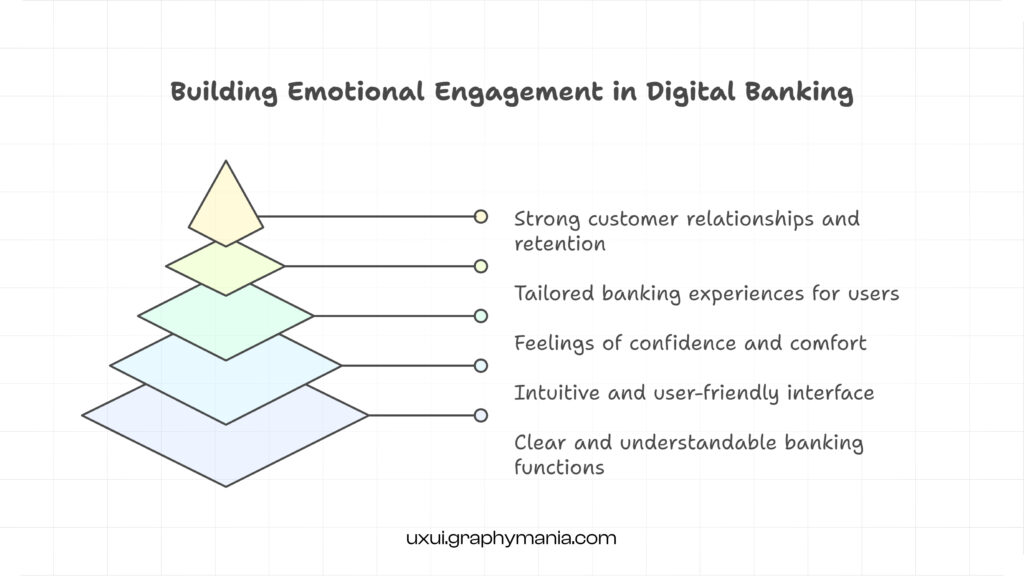
Strategies for Emotional Engagement in Banking
Designing for emotion requires intention, not decoration.
Implementing Personalization in Banking
Personalization in banking goes beyond using a customer’s name. It includes:
Context-aware insights
Customized dashboards
Relevant nudges based on behavior
As a result, users feel the experience is built for them, not for everyone.
Blending Digital Efficiency with Human Empathy
Efficiency matters, but empathy differentiates. Clear error messages, supportive onboarding, and human language reduce stress. Therefore, banks must design with both logic and emotion in mind.
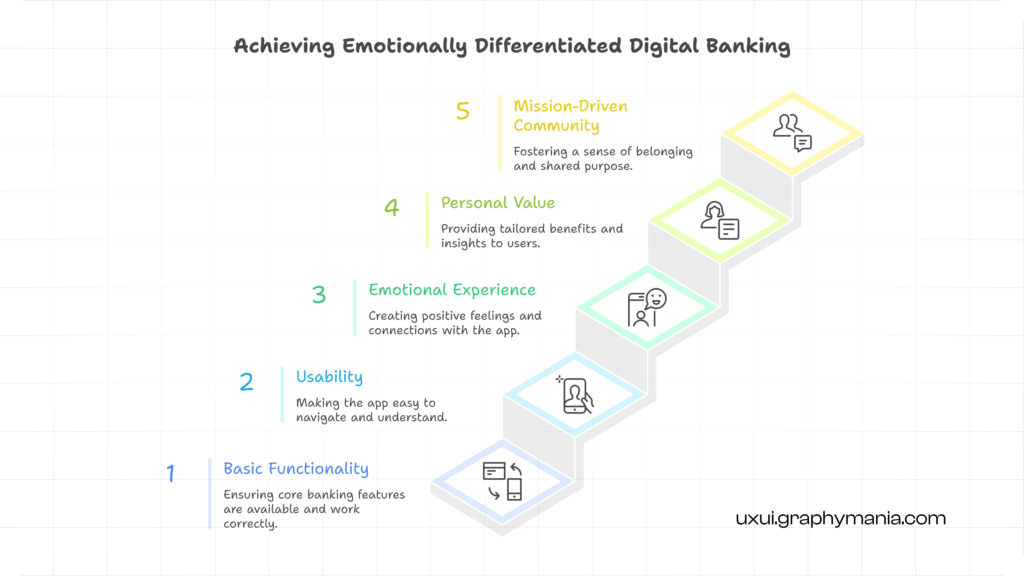
A 5-Level User Experience (UX) Strategy to Break the Clone Cycle
A strong user experience (UX) strategy evolves through maturity levels.
From Functional Utility to Mission Value
Functional – The app works
Usable – Easy to navigate
Emotional – Feels good to use
Personal – Adapts to the user
Purpose-Driven – Reflects shared values
Banks that reach level five move beyond transactions and create community.
Measuring the ROI of Emotional UX
Although emotional design feels intangible, its impact is measurable. Metrics include:
Increased retention
Higher engagement
Reduced support costs
Therefore, emotional UX is not a cost; it is an investment.
Conclusion: Turning Your Financial Brand from a Commodity into a Community
In the age of clones, sameness is the real risk. The Digital Banking Experience must evolve from functional interfaces to emotionally rich journeys. Banks that invest in emotional engagement in banking, personalization, and differentiation will earn trust and loyalty.
At Graphymania, we believe UX UI design is not just about usability; it is about identity. By moving beyond generic banking apps and embracing human-centered design, financial brands can transform from interchangeable services into meaningful digital companions.
"When every banking app looks the same, UX becomes the only true identity.”

MOHD ARMAN
FAQs
1. Why do most digital banking apps look the same?
Because banks rely on safe, proven patterns to reduce risk, which leads to clone-like designs.
2. How does UX UI design improve customer loyalty in banking?
By creating emotional connection, trust, and memorable experiences that users want to return to.
3. What is Dopamine Banking?
It is a UX approach that uses positive feedback and progress signals to encourage engagement.
4. Can traditional banks compete with neobanks in UX?
Yes, by adopting personalization, empathy, and strong UX strategy.