Healthcare UX design is no longer just about clean screens or smooth navigation. In 2026, it plays a direct role in patient safety, trust, and clinical outcomes. As digital health products become part of everyday care, users expect experiences that feel simple, reassuring, and human. At the same time, healthcare teams must balance compliance, accessibility, and complex data without overwhelming patients.
Healthcare UX design sits at the intersection of technology and empathy, because users are often stressed, unwell, or making critical decisions. That’s why healthcare user experience must reduce friction, prevent errors, and guide users with clarity. From appointment booking to remote monitoring, every interaction matters.
In this evolving landscape, product teams and startups need a patient-first approach that aligns usability with regulation. This article explores the key trends shaping healthcare UX design in 2026, and how Graphymania approaches digital healthcare UX with clarity, safety, and trust at the core.
UX Design in Healthcare Is Becoming Context-Aware
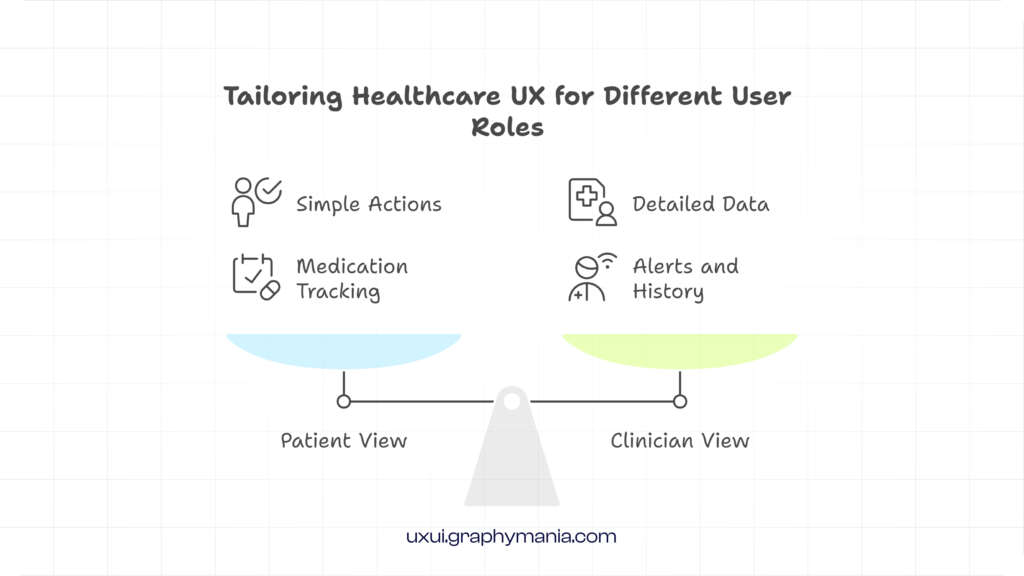
In 2026, UX design in healthcare is shifting from static flows to context-aware experiences. Healthcare apps now adapt based on who the user is, what they need, and when they need it.
For example, a patient managing a chronic condition sees different information than a first-time user booking a consultation. Meanwhile, caregivers and clinicians access deeper data views, but without clutter.
Key characteristics of this trend include:
Interfaces that change based on patient history and behavior
Clear prioritization of critical actions, such as medication reminders
Reduced cognitive load during stressful moments
However, context-aware design must remain predictable. While personalization helps, sudden changes can confuse users. Therefore, healthcare software usability depends on subtle adaptation, not dramatic interface shifts.
Medical UX Design Is Prioritizing Safety Over Speed
Medical UX design in 2026 places patient safety above everything else. Fast experiences still matter, but not at the cost of clarity or accuracy.
Errors in healthcare systems can have serious consequences. As a result, designers are focusing on:
Clear confirmations for critical actions
Readable data visualization for test results
Strong visual hierarchy to prevent misinterpretation
For example, lab results are no longer shown as raw numbers alone. Instead, they include context, color guidance, and plain-language explanations. However, designers must avoid alarming visuals that increase anxiety.
In addition, usability in healthcare systems now includes designing for edge cases, such as users with low digital literacy. Because of this, Graphymania emphasizes validation, feedback, and error prevention in every healthcare product design.
UI Design for Healthcare Is Embracing Calm Interfaces
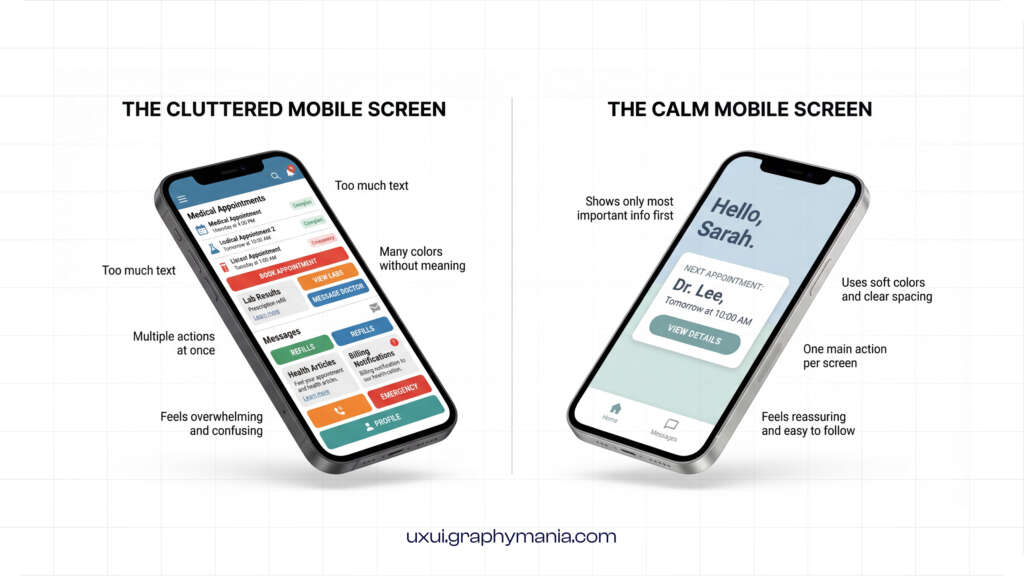
UI design for healthcare is moving away from dense dashboards and toward calm, focused layouts. In 2026, visual noise is seen as a usability risk.
Healthcare environments are emotionally charged. Therefore, digital products must feel stable and reassuring. This shift includes:
Neutral color palettes with purposeful highlights
Larger typography for readability
Consistent spacing and familiar patterns
Minimalism, however, does not mean oversimplification. Important information must remain visible, especially in healthcare app UX design where decisions are time-sensitive.
Calm interfaces help patients feel in control, and as a result, they improve engagement and adherence. For healthcare startups, this approach also builds long-term trust.
Digital Healthcare UX Is Becoming More Accessible by Default
Accessibility in healthcare UX is no longer optional. In 2026, it is a baseline requirement driven by ethics, regulation, and user expectation.
Patients come with diverse abilities, languages, and limitations. Therefore, digital healthcare UX must support:
Screen readers and assistive technologies
High contrast modes and scalable text
Simple language and icon-supported navigation
Accessibility also improves overall usability. For example, clearer labels help everyone, not just users with disabilities. As a result, accessible design directly supports healthcare software usability.
Graphymania treats accessibility as a design foundation, not a checklist. Because inclusive design reduces risk and improves reach, it benefits both patients and providers.
Healthcare Product Design Is Integrating Trust Signals
Trust is fragile in healthcare, especially in digital experiences. In 2026, healthcare product design actively communicates credibility and transparency through User Experience.
Trust-building elements include:
Clear data usage explanations
Visible compliance cues without legal overload
Human language instead of system jargon
HIPAA-compliant UX design plays a major role here. While compliance often adds complexity, good UX design makes privacy feel protective rather than restrictive.
For example, consent flows now explain “why” before asking users to act. Therefore, patients feel informed instead of pressured. This approach strengthens confidence and long-term engagement.
Healthcare App UX Design Is Supporting Ongoing Care Journeys
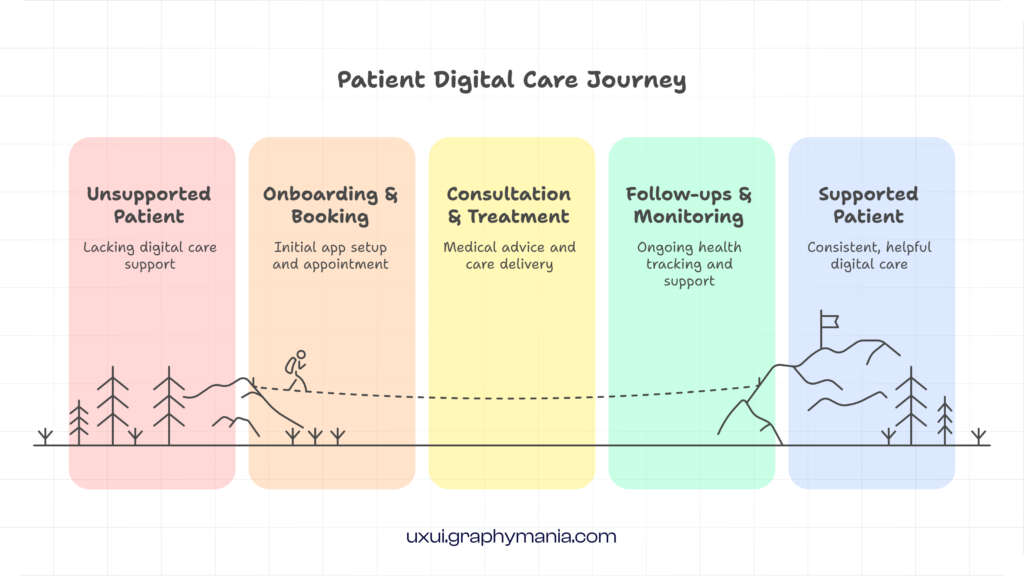
Healthcare app UX design is evolving from task-based interactions to long-term care journeys. In 2026, apps support patients before, during, and after care.
This means:
Clear onboarding that sets expectations
Ongoing feedback and progress tracking
Gentle nudges instead of aggressive alerts
Because healthcare is not a one-time interaction, UX design in healthcare must support continuity. Meanwhile, designers must avoid notification fatigue, which can reduce adherence.
By mapping emotional and clinical journeys, Graphymania designs healthcare experiences that feel supportive rather than demanding.
Conclusion
Healthcare UX design in 2026 is defined by empathy, clarity, and responsibility. As digital tools become essential to care delivery, design decisions directly impact patient outcomes. Therefore, healthcare UX design must balance usability, accessibility, safety, and compliance without overwhelming users.
Patient-first digital products succeed when they feel calm, trustworthy, and inclusive. By focusing on patient-centered design, healthcare teams can build experiences that support real human needs, not just system requirements.
At Graphymania, we believe great healthcare UX design is invisible when it works and invaluable when it matters most.
"Great healthcare UX doesn’t just simplify screens; it reduces anxiety, prevents errors, and builds trust when patients need it most."

MOHD ARMAN
FAQs
1. What is healthcare UX design?
Healthcare UX design focuses on creating digital healthcare products that are easy, safe, and accessible for patients, caregivers, and clinicians.
2. Why is UX design important in healthcare applications?
Because poor usability can lead to errors, confusion, and loss of trust, while good UX improves safety, engagement, and outcomes.
3. How does accessibility impact healthcare user experience?
Accessibility ensures that people of all abilities can use healthcare systems effectively, which improves overall usability and compliance.
4. What makes healthcare UX different from other industries?
Healthcare UX must prioritize patient safety, privacy, emotional state, and regulatory compliance alongside usability.
5. How can startups improve healthcare app UX design?
By focusing on clear flows, calm UI design, accessibility, and transparent data practices from the start.