Healthcare UX design is no longer a surface-level consideration. It shapes how patients feel, behave, and decide in moments that often carry emotional weight. From booking an appointment to reviewing lab reports, every digital touchpoint influences the overall healthcare user experience. When systems feel confusing, patients hesitate. When interfaces feel intuitive, they engage with confidence.
Healthcare UX design also directly impacts safety and long-term loyalty. In an industry where data sensitivity and emotional vulnerability intersect, experience design becomes a foundation for trust. As digital health platforms continue to expand, UX design in healthcare must move beyond aesthetics and focus on clarity, accessibility, and compliance. At Graphymania, a premium UI/UX agency, we believe that strategic, patient-first design is what transforms healthcare platforms into trusted digital ecosystems.
UX Design in Healthcare Establishes Immediate Trust
The first interaction with a healthcare platform sets the emotional tone. Patients may already feel anxious about symptoms, diagnoses, or upcoming procedures. Therefore, UX design in healthcare must immediately communicate clarity and reliability.
Clear typography, intuitive navigation, and consistent UI design for healthcare systems reduce cognitive strain. When users can easily find appointment details or access reports without confusion, they feel in control. That sense of control builds trust. If you are building patient platforms or hospital systems, our specialized UI UX design for healthcare services focuses specifically on safety, compliance, and patient-centered digital ecosystems.
Meanwhile, trust is not built through visuals alone. Transparent communication about data protection, secure authentication flows, and plain language explanations reinforces credibility. Digital healthcare UX must combine visual stability with informational reassurance.
The Role of Transparency in Medical UX Design
Transparency helps patients understand what is happening at every step. For example, when a portal clearly shows appointment status, insurance coverage details, and expected response times, patients feel informed rather than uncertain.
Micro-interactions also influence perception. Confirmation messages, progress indicators, and clearly labeled buttons make platforms feel dependable.
Mini Case Scenario
Imagine a patient logging in to review lab results. In one scenario, medical terms appear without explanation. The patient panics. In another scenario, the same results are accompanied by simplified summaries and visual indicators that explain ranges. Anxiety decreases instantly.
This is the difference thoughtful healthcare UX design makes.
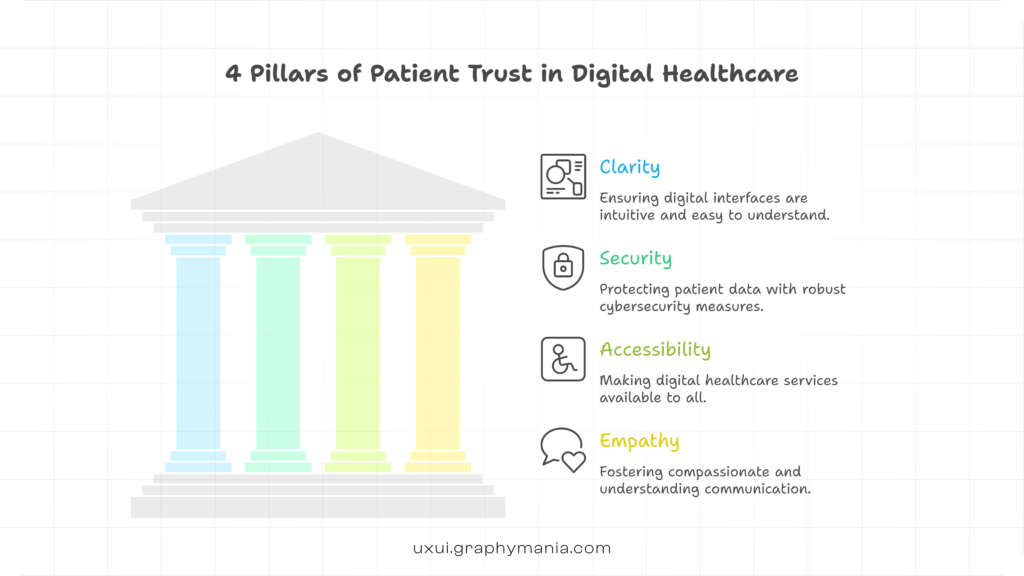
Trust creates the foundation. However, in healthcare, trust must also protect lives. That brings us to safety.
Medical UX Design Influences Patient Safety
Medical UX design impacts clinical accuracy and decision-making. When healthcare software usability is weak, errors increase. When usability in healthcare systems is strong, safety improves.
Healthcare platforms often handle complex data sets, multiple user roles, and time-sensitive information. Therefore, the structure and hierarchy of information are critical.
Poor layouts can lead to incorrect data entry or overlooked alerts. Meanwhile, intuitive dashboards help providers access essential information quickly.
Designing for Error Prevention
Safety-oriented healthcare product design focuses on preventing mistakes before they occur.
This includes:
Clear differentiation between patient records
Color-coded alerts for urgent updates
Smart validation for form inputs
Logical grouping of related information
These patterns reduce risk while improving efficiency.
Mini Case Scenario
Consider a hospital system where patient profiles are visually similar. A provider could accidentally update the wrong record. However, if profiles include distinct visual markers, such as photo thumbnails and color-coded identifiers, errors become less likely.
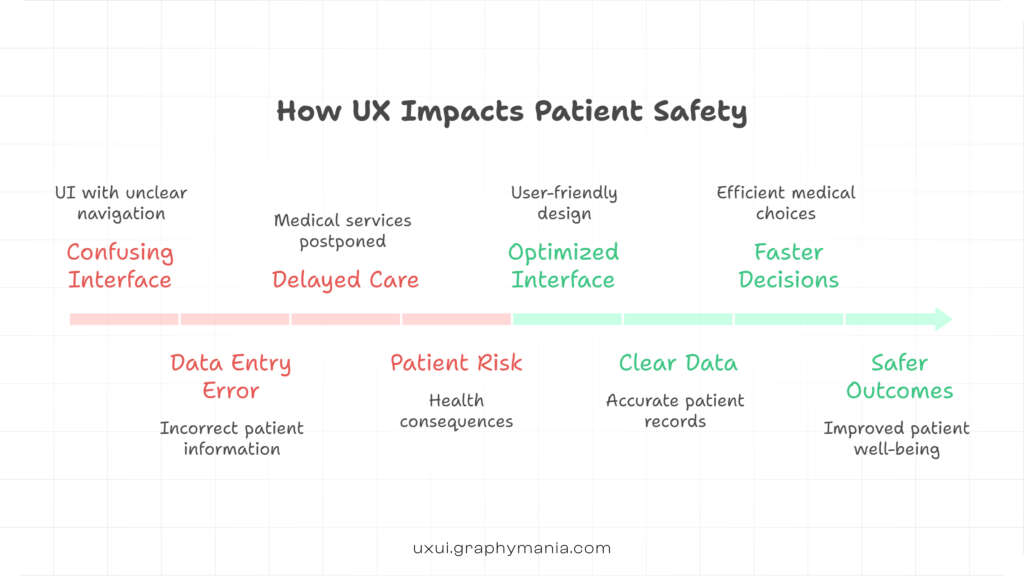
Safety strengthens trust. Yet trust and safety alone do not guarantee long-term engagement. Retention depends on experience continuity.
Healthcare App UX Design Drives Retention Through Simplicity
Retention in healthcare depends on sustained interaction. Patients may not think in terms of loyalty, but they naturally return to platforms that feel reliable and easy.
Healthcare app UX design should simplify recurring tasks such as booking appointments, reviewing prescriptions, and attending teleconsultations.
When tasks require minimal effort, adoption increases. However, if login processes are complicated or navigation is unclear, patients disengage.
Designing for Long-Term Engagement
Digital healthcare UX supports retention through:
Personalized dashboards
Proactive reminders
Seamless telehealth integration
Clear follow-up communication
Personalization also matters. When patients see relevant information immediately upon login, the experience feels tailored.
Mini Case Scenario
A telehealth app requires five steps to rebook an appointment. Many users drop off mid-process. After redesigning the journey into a two-step flow, rebooking rates increase significantly.
Small design decisions can reshape user behavior.
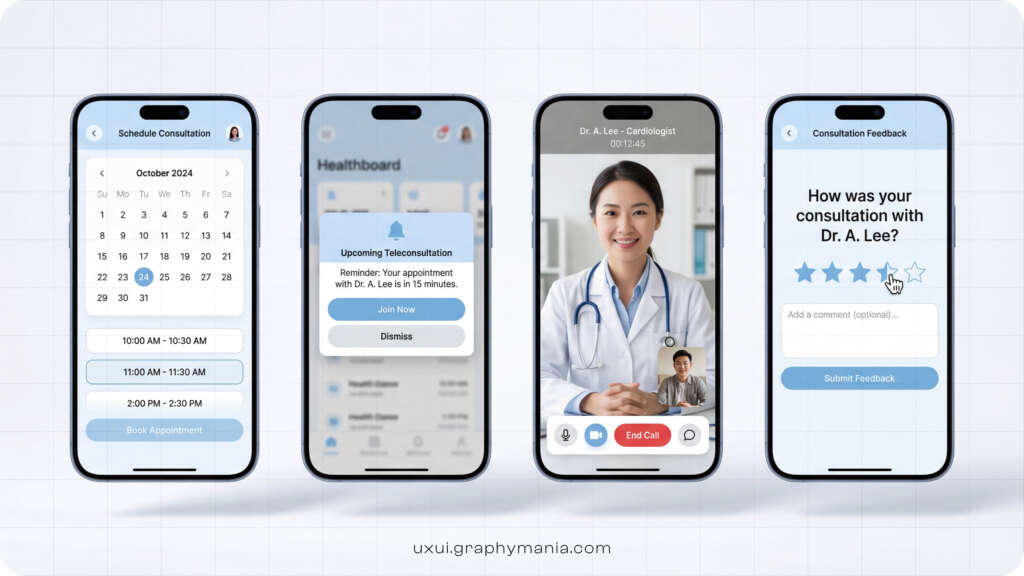
As engagement improves, operational efficiency becomes the next critical factor.
Healthcare Software Usability Enhances Provider Efficiency
Healthcare systems serve providers as much as patients. Therefore, usability in healthcare systems must reduce friction for medical professionals.
When providers spend excessive time navigating dashboards, patient care suffers. Efficient healthcare software usability minimizes documentation fatigue and improves workflow clarity.
Strong UX design in healthcare ensures that patient histories, diagnostic reports, and treatment plans are accessible without unnecessary clicks.
Streamlining Clinical Workflows
Effective healthcare product design considers:
Quick search functionality
Predictive auto-fill fields
Structured data hierarchy
Reduced duplication of inputs
These elements save time and lower cognitive strain.
Mini Case Scenario
A clinic’s existing dashboard requires multiple tabs to access prescription history. After restructuring into a unified patient overview, consultation time decreases, and provider satisfaction improves.
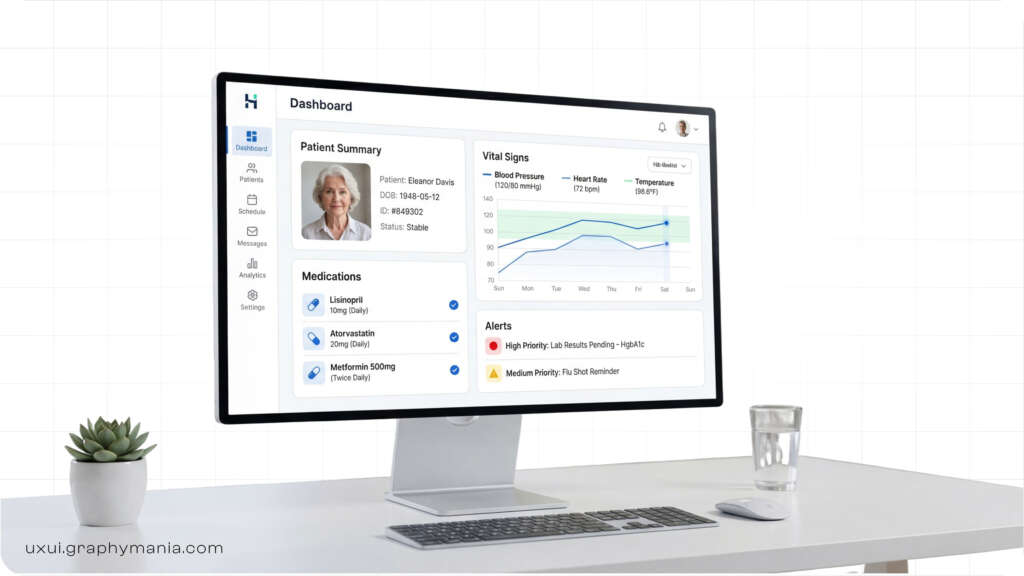
Efficiency enhances service quality. However, healthcare cannot be inclusive without accessibility.
UI Design for Healthcare Must Prioritize Accessibility
Accessibility in healthcare UX is fundamental. Patients include elderly users, individuals with disabilities, and those with limited technical familiarity.
UI design for healthcare should accommodate diverse needs through visual clarity and adaptable interfaces. and should follow recognized accessibility standards such as the Web Content Accessibility Guidelines.
High contrast color schemes, adjustable font sizes, and screen reader compatibility ensure inclusive digital healthcare UX.
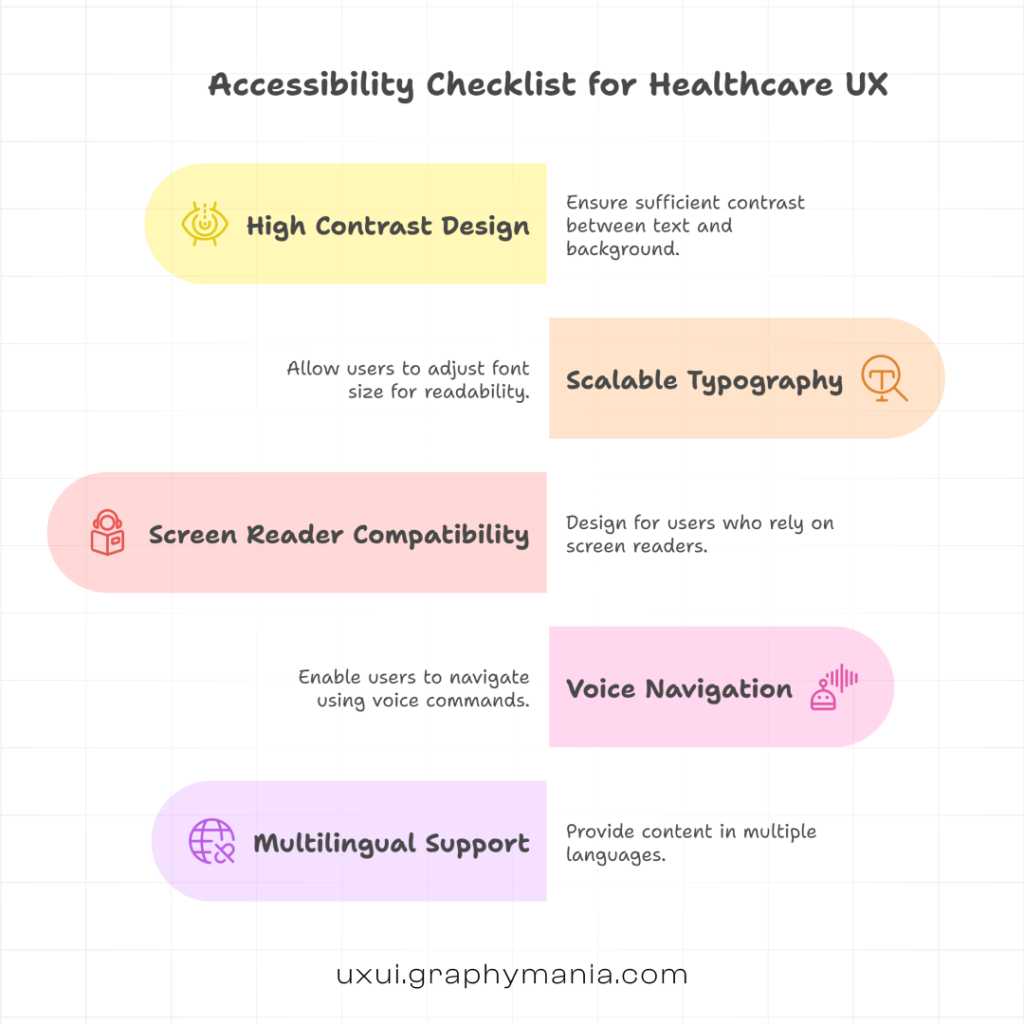
Designing for Inclusive Patient-Centered Care
Accessibility is directly tied to patient-centered design. When platforms are inclusive, patients feel respected and supported.
In addition, multilingual support and simplified instructions reduce barriers for diverse populations.
Mini Case Scenario
An elderly patient struggles to read small text on a prescription app. After introducing scalable font options and voice assistance, the patient can independently manage medication reminders.
Inclusivity builds equity. However, without security and compliance, trust remains fragile.
HIPAA Compliant UX Design Balances Security and Simplicity
Data protection is central to healthcare UX design. Patients must feel confident that their information is secure. As healthcare technology evolves, experience expectations will only increase. In our recent analysis on healthcare UX design in 2026, we explore how patient-first digital care models are reshaping retention and engagement strategies.
Healthcare platforms must align with federal privacy standards defined by the U.S. Department of Health and Human Services. HIPAA-compliant UX design should not overwhelm users with complex authentication steps. Instead, it should guide them clearly through secure processes.
Clear explanations of why data is requested and how it is protected strengthen confidence.
Security Without Friction
Effective digital healthcare UX includes:
Guided two-factor authentication
Transparent consent forms
Session timeout notifications
Secure document uploads with visual confirmation
Security becomes reassuring rather than intimidating.
Mini Case Scenario
A patient abandons onboarding due to unclear data consent forms. After redesigning the flow with simplified explanations and progress indicators, completion rates increase.

Security strengthens loyalty. Yet emotional comfort remains equally important.
Digital Healthcare UX Reduces Anxiety Through Empathy
Healthcare journeys are emotional. Therefore, medical UX design must support emotional clarity as much as functional clarity.
Calm color palettes, empathetic microcopy, and supportive messaging reduce stress.
Instead of abrupt error messages, compassionate language guides users gently. Instead of uncertainty during wait times, estimated response indicators create reassurance.
Designing Emotional Flow
Healthcare user experience should include:
Clear progress indicators
Friendly confirmation screens
Guided onboarding tutorials
Predictable interaction patterns
Mini Case Scenario
During teleconsultation onboarding, a tutorial explains camera setup and connection steps. As a result, patients feel prepared rather than anxious.
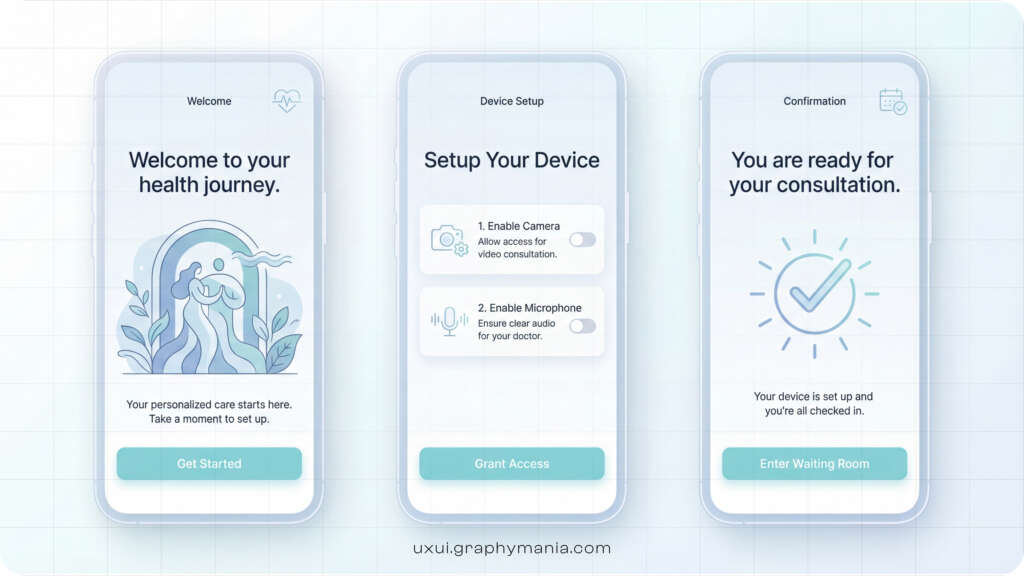
Emotionally intelligent healthcare UX design transforms digital platforms into trusted companions.
At Graphymania, we continuously research evolving patient behavior patterns to refine digital healthcare UX strategies.
Conclusion
Healthcare UX design shapes more than interfaces. It influences trust, safety, compliance, accessibility, and retention. When thoughtfully executed, healthcare UX design supports both providers and patients through clarity and reliability.
Organizations that invest in healthcare UX design build systems that prioritize usability, emotional comfort, and regulatory responsibility. In addition, patient-centered design ensures that platforms remain inclusive and human-focused.
At Graphymania, we see healthcare UX not as decoration, but as infrastructure for trust. When UX design in healthcare is strategic and empathetic, it strengthens relationships, improves safety, and supports long-term growth in an increasingly digital healthcare landscape.
"In healthcare, clarity is safety. Thoughtful UX design protects both patient confidence and patient outcomes."

MOHD ARMAN
FAQs
1. What is healthcare UX design?
Healthcare UX design is the process of creating intuitive and safe digital healthcare platforms that improve the overall healthcare user experience for patients and providers.
2. Why is healthcare UX design important?
Healthcare UX design builds patient trust, reduces errors, and improves engagement by making healthcare systems simple, secure, and easy to navigate.
3. How does UX design in healthcare improve patient safety?
UX design in healthcare improves safety by organizing medical data clearly, preventing input errors, and enabling faster clinical decisions.
4. What makes effective healthcare app UX design?
Effective healthcare app UX design includes simple navigation, accessibility features, secure login flows, and clear communication.
5. Why is accessibility important in healthcare UX?
Accessibility in healthcare UX ensures digital platforms can be used by elderly users, people with disabilities, and diverse patient groups.
6. What is HIPAA compliant UX design?
HIPAA compliant UX design ensures healthcare applications protect patient data while maintaining usability and clear consent processes.
7. How does healthcare product design improve retention?
Healthcare product design improves retention by simplifying appointments, follow-ups, and patient communication.
8. What are common challenges in medical UX design?
Common challenges include regulatory compliance, complex workflows, data-heavy dashboards, and integration with legacy systems.